Morbi vs. Rajasthan: Where Should You Source Your Tiles From?
Morbi vs. Rajasthan: Where Should You Source Your Tiles From?
Admin
August 19, 2026
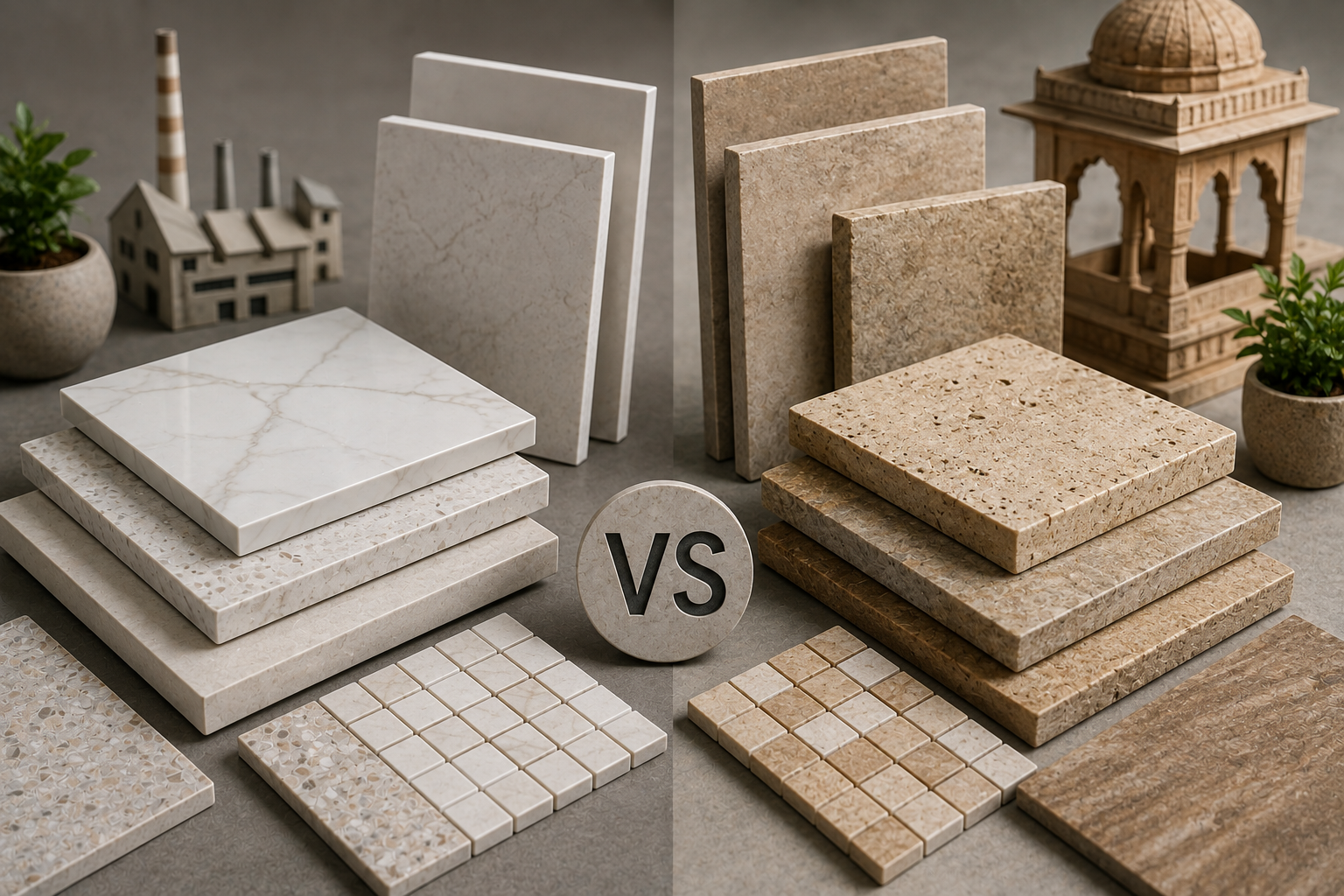
Buyers often ask this as if it’s a choice between two tile clusters — but it’s really a choice between two different materials, produced in two very different ways, in two very different parts of India. Morbi, Gujarat is the country’s ceramic and vitrified tile capital. Rajasthan is its natural stone belt — marble, granite, and sandstone, quarried rather than manufactured. Understanding that distinction matters more than picking a region.
Morbi: engineered consistency at scale
Ceramic and vitrified tiles from Morbi are manufactured, not quarried — clay and other raw materials are processed, pressed, glazed, and fired under controlled conditions. That process advantage shows up directly in what a buyer gets: highly consistent sizing, predictable batch-to-batch color matching, and a wide range of finishes — glazed, matte, high-gloss, anti-slip — engineered to spec rather than found in nature. For large-scale, budget-sensitive, or fast-turnaround projects where visual uniformity across thousands of square feet matters, engineered tile is usually the more practical choice. It’s also why Morbi became the world’s largest ceramic tile cluster in the first place — the manufacturing process scales in a way quarrying simply can’t.
Rajasthan: natural material, natural variation
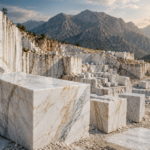
Marble, granite, and sandstone from Rajasthan’s quarry belts — Makrana, Kishangarh, Rajsamand, and others — are cut from the earth, not manufactured, which means every slab carries some degree of natural variation in veining, color, and pattern. That variation is exactly what buyers seeking natural stone are usually paying for: no two installations look quite the same, and the material carries a permanence and depth that engineered tile doesn’t attempt to replicate. It also comes with trade-offs — more porous stone types need sealing, natural variation makes large-area batch matching harder, and per-square-foot costs typically run higher than ceramic tile. For more on which specific belt produces what, see our guide to India’s marble belts.
The real decision framework
This isn’t Morbi versus Rajasthan so much as it’s tile versus stone, and the right answer depends on the project:
Choose engineered tile (Morbi) when: budget per square foot is a primary constraint, the project needs highly consistent, repeatable visual uniformity across a large area, or the application is high-traffic commercial space where durability and low maintenance matter more than natural variation.
Choose natural stone (Rajasthan) when: the project is a premium residential or hospitality space where material authenticity is part of the brief, some visual variation between pieces is acceptable or even desired, and long-term value and finish depth matter more than upfront cost.
Consider combining both when a project has both cost-sensitive and premium zones — tile for high-traffic or back-of-house areas, natural stone for feature walls, lobbies, or countertops. Buyers sourcing across both categories from a single partner also avoid managing two separate supplier relationships, two separate MOQs, and two separate shipping timelines — which is exactly why we source both tile and stone alongside sanitaryware rather than specializing in only one.
A practical cost comparison, in general terms
Ceramic and vitrified tile from Morbi is almost always the lower per-square-foot option, often by a meaningful margin, because manufacturing at scale is inherently more cost-efficient than quarrying and processing natural stone. Natural stone’s premium isn’t arbitrary, though — it reflects lower yield per quarry block, more labor-intensive finishing, and the simple fact that supply is finite in a way manufactured tile isn’t. Neither is the “right” price; they’re pricing two different value propositions.
What to ask regardless of which you choose
For tile: request batch photos and confirm rectification (edge-cutting for tighter grout lines) before ordering at scale. For stone: confirm which quarry or belt the material is actually from, not just “Rajasthan marble” as a catch-all — because within that one state, the difference between belts in color, hardness, and price can be significant. Either way, ask about the inspection process before the order ships, not after it arrives.
Quick Questions Buyers Ask
Q: Is natural stone always more expensive than tile?
A: Generally yes, per square foot — but the gap varies significantly by stone type and tile finish, and premium engineered tile can sometimes cost more than entry-level natural stone.
Q: Can I mix Morbi tile and Rajasthan stone in the same shipment?
A: Yes — combining categories in a single consolidated order is common and can simplify logistics if you’re sourcing both for the same project.
Q: Which one is easier to maintain long-term?
A: Ceramic and vitrified tile generally require less maintenance than natural stone, which often needs periodic sealing depending on porosity — worth factoring into total cost of ownership, not just purchase price.